
Author: Sergio Quevedo

  • Abide — Part 2: The Rhythm Underneath the Everything

    Abide — Part 2: The Rhythm Underneath the Everything

    Part 2 of 5 — The TABLE Series

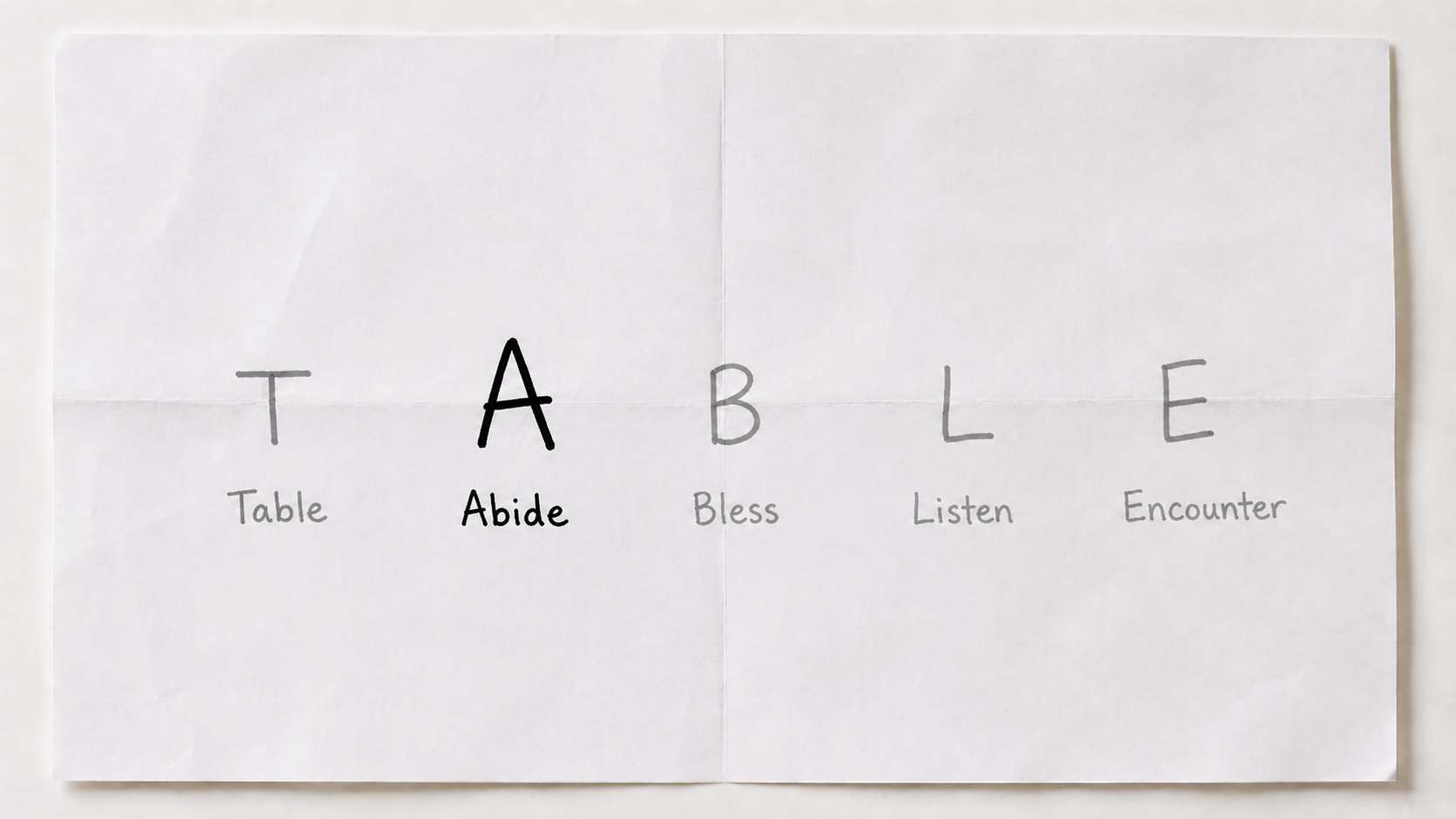
    This is Part 2 of five posts on TABLE — a simple rhythm for living the way Jesus lived, built around people already in your life. It’s rooted in what Ellen White called “Christ’s method alone” for reaching people: He mingled with them, sympathized with them, ministered to their needs, won their confidence, and only then said, “Follow Me” (Ministry of Healing, p. 143 — please verify wording). Each post covers one letter — Table (eat), Abide (pray), Bless (serve), Listen (notice), Encounter (be ready) — and you can read them in any order.

    “Abide in me, and I in you. As the branch cannot bear fruit by itself, unless it abides in the vine, neither can you, unless you abide in me” (John 15:5). Everything else in this series depends on this one. Table, Bless, Listen, Encounter — none of it holds up if this rhythm isn’t underneath it.

    We need to remember these aren’t magic methods for growing a church. The church isn’t ours, and it’s Christ who makes it grow (Matthew 16). We make disciples, but the same way Jesus sent His disciples, He has to send us. That work only happens by the power of the Holy Spirit. Jesus commissioned His disciples to go into all the world, but not before they received the power of the Spirit (Acts 1:4, 8). We need the Spirit to be sent to bless and eat with the people God wants us to reach. He decides how and when His work gets done — our job is to be available and sensitive to His voice so He can use us.

    Philip received the order: “Go over and join this chariot” — this was about the Ethiopian who was passing by in his chariot, reading Isaiah 53. Philip simply obeyed, and the account tells us the Ethiopian accepted Christ and was baptized. Philip was ready to hear and obey the voice of the Holy Spirit. How can we become sensitive to the Spirit’s voice? By going deeper into God’s Word and spending time in prayer. We see this in Jesus’s own example — He often spent the whole night praying. If Jesus, who was without sin, immersed Himself in Scripture and spent that much time in prayer, how much more do we, poor sinners, need that kind of deep communion. That communion puts us in a direct line with heaven, and gives us the conviction that it’s the Lord sending us.

    Every day, just like Christ, we need to spend time in prayer and Bible study. Intentionality is the key, because the tasks of daily life take over, and communion with God is often the first thing pushed aside. I prefer my time of communion in the early morning, while everyone else is still asleep — before dawn, receiving His Word and talking with Him in prayer, in a meeting that feels like just the two of us. That may work for you, or it may not — if it doesn’t, put it on your calendar, as important as any appointment or work meeting, and keep the visit with God. The Holy Spirit is given to those who really want Him and cry out for Him (Luke 11). Be intentional, and share the experience with your accountability group. The way we pray changes too — we pray intentionally for God to send us to be a blessing to someone.

    Reaching people always requires a deep relationship with the One we’re presenting and lifting up before them — Jesus Christ. Relating intimately with Christ asks a little more of us — an intentionality about seeking Him directly in the Gospels. When Jesus met Nicodemus, He said, “As Moses lifted up the serpent in the wilderness, so must the Son of Man be lifted up” (John 3:14). He was referring to the moment Israel was dying from a snake infestation in their desert camp because of their complaining. God in His mercy told Moses to make a bronze serpent and lift it on a pole, and said that anyone who was bitten and looked at it would live (Numbers 21:9). Life was given to whoever simply looked. God didn’t command anyone to believe or profess their faith first — just look, and live. What Jesus tells Nicodemus is that life is found in looking at Christ. Believing comes as a consequence, a gift from God. Faith in Christ isn’t something we manufacture in ourselves — God gives it as a gift. “For by grace you have been saved through faith, and that not of yourselves; it is the gift of God” (Ephesians 2:8). What we can do is look at Christ, contemplate His beauty, goodness, and love, and He will place faith in our hearts. Spending time reading the Gospels is one of the best ways to look at Christ and receive His transformation.

    After I read the Bible, I always go to one of the Gospels and read a story or two. I sit with the story and pray for the Spirit to show me what He wants me to learn from it. I ask first to see Christ clearly in it. I put myself inside the story, two thousand years back, as if I were part of the crowd, or one of the disciples, or someone Jesus healed — or maybe someone who was passing through and didn’t receive healing. I think through the possibilities, use my imagination, and tell Jesus what I’m thinking and feeling.

    I like keeping a journal where I write down my thoughts, but also talk with Jesus about what I just read. Sometimes it’s a serious, deep conversation. Sometimes it’s light and funny. Have you ever laughed with Jesus? If He’s really your friend, don’t you think you should have some fun moments with Him? Do you have a close friend you’ve never laughed with? Of course not — what a flat friendship that would be. If you know me, you know I like to joke around — why would I be serious with Him all the time?

    You’ll only get these good moments with Him, and reach that kind of closeness, if there’s intentionality in the relationship with Jesus every day. And when you witness to someone about Jesus, you’ll be able to talk about a Friend, not a doctrine. Doctrine matters, but it only makes sense if you have a personal, deep relationship with the Author of it. You’ll be able to talk about an experience, not just a theory — and that’s what you’ll need when the door opens to share Christ.

    Next: Bless — the rhythm of giving without expecting anything back.
  • Table — Part 1: Eat With Three People a Week

    Table — Part 1: Eat With Three People a Week

    Table

    Part 1 of 5 — The TABLE Series

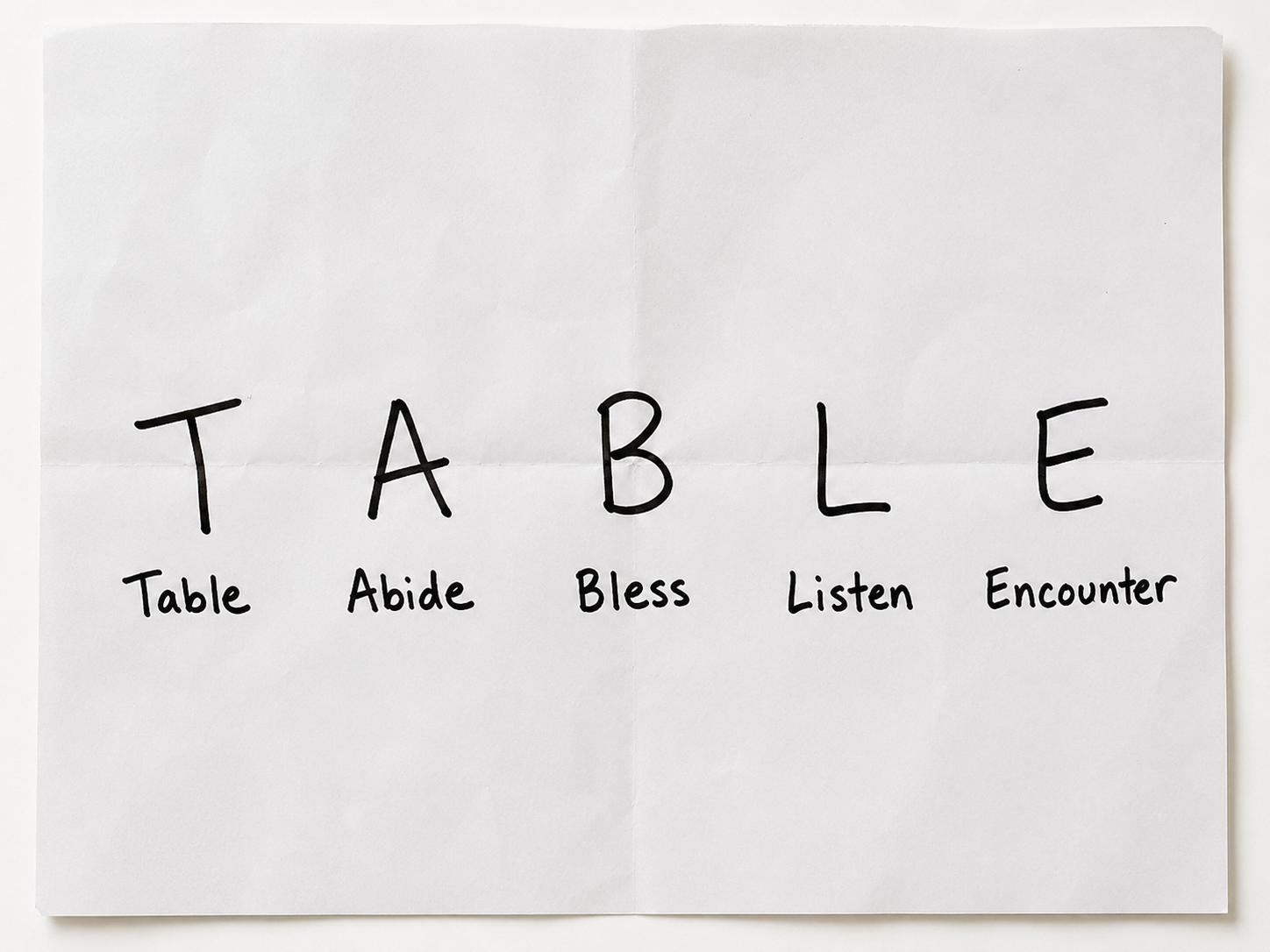
    This is Part 1 of five posts on TABLE — a simple rhythm for living the way Jesus lived, built around people already in your life. It’s rooted in what Ellen White called “Christ’s method alone” for reaching people: He mingled with them, sympathized with them, ministered to their needs, won their confidence, and only then said, “Follow Me” (Ministry of Healing, p. 143 — please verify wording). Each post covers one letter — Table (eat), Abide (pray), Bless (serve), Listen (notice), Encounter (be ready) — and you can read them in any order.

    Ellen White put it in one line: “Christ’s method alone will give true success in reaching the people. The Savior mingled with men as one who desired their good. He showed His sympathy for them, ministered to their needs, and won their confidence. Then He bade them, ‘Follow Me’” (Ministry of Healing, p. 143).

    Mingle first. Not teach first. Not correct first. And the oldest, easiest way to mingle with someone is to eat with them.

    You already do this three times a day — twenty-one meals a week, whether you’re thinking about mission or not. TABLE isn’t one more thing on your calendar. It’s three of those twenty-one meals, done on purpose, with at least one person who isn’t already sitting next to you on Sabbath.

    That’s the whole instruction. Eat with three people a week. At least one from outside the church.

    Eat with three people a week. Simple as that — they can be from church, but at least one of them should be someone not connected to the church. In my context, in the northern United States, that’s a harder idea than it sounds. Americans are more individualistic than Latinos, and find it harder to open their homes and offer their table. But I’ve seen more and more that as they practice these divine actions, people open up and show that human beings were made for relationship — especially if there’s food involved! In my own experience with my neighbors and with community members in general (who are Americans), we’ve had success including these people in our lives through dinners, snacks, parties, or any kind of social gathering.

    The goal isn’t to add more activity to your already-full calendar. It’s to use something you already do — eat — for God’s mission. All of us eat, most of us at least three times a day. That’s twenty-one meals a week. We’re not suggesting you do anything beyond what you’re already doing, only that you become intentional about using three of those meals for God’s mission. What comes up at the table depends on the relationship. Don’t force any subject — remember, the goal is to get close and to relate. Once you’ve won people’s friendship and trust, they’ll give you the opportunity to witness of Christ at some point. Don’t run ahead of the Holy Spirit’s schedule.

    As I said, my wife and I have dinner regularly with neighbors and friends we’ve made in the community. We’ve made it a rhythm in our life. They come to our house, and we go to theirs. Sometimes we invite friends from church too, and end up with three or four couples over — a little party. That’s good, because our neighbors connect with other friends, and even if we move away someday, they’ll have a bigger circle of friends than when we met them. If we have two neighbor couples with kids, we invite church friends who also have kids. If they don’t have kids, we invite friends who don’t either. Connecting these people with each other, we see something added to their lives — they see they’re not alone anymore.

    We often get the chance to talk about Jesus, but we wait for the opportunity to come from them. Our friends from church are well-trained in this. You can choose to host these little parties or open your home for dinners once a month, or more — some people do it weekly.

    One of our neighbors, Kevin, is agnostic and likes to teach me about evolution. Right now he’s not interested in hearing anything about God, so what do I do? Nothing. I keep being his friend, and we keep going to each other’s houses to eat. One of the last times we were at his place for dinner, he called us over to also show off a new toy he’d bought — a hoverboard. It looks like a skateboard but with a motor, and you can ride it inside the house (with a good chance of breaking all the furniture). He had two, and insisted I ride with him. We rode around with it for hours after dinner, racing each other and playing tag.

    He’s forty and an extremely successful professional, but in those moments he seemed like a kid. At the end of the night, saying goodbye, he hugged me and said, “I love you, brother. It’s so good to have a friend to share life with.” That’s the language of someone who knows God, not an agnostic. He’s being drawn in by the Kingdom of God and reached by His love, and he doesn’t even know it yet. But he’ll know soon, at the right time.

    The truth is, we have to make ourselves more available. If you have to turn down dinner with your neighbors, or can’t spend time with them because you’re working too much, then you’re simply working too much. If you’re too busy to live the life of Christ in your context, too busy to spend time with people regularly, then you’re too busy.

    If we live too rushed to show God’s love by giving our time and friendship to the people He sent us to, then we’re too rushed. “Love and hurry are fundamentally incompatible. Love always takes time, and time is exactly what hurried people don’t have” (John Ortberg).

    I also try to meet people during the week for a drink or a snack. I’ve made it an essential rhythm in my life, since Jesus did this constantly — and we’ve seen beautiful results for the Kingdom because of it. Sometimes you’re used to eating in front of a computer at work or school — make the effort to join someone instead. Even if you don’t drink coffee, inviting someone to grab one while you have water or juice is an easy way to practice this.

    Next: Abide — the rhythm underneath all the others, the one that makes the rest of TABLE possible.